Autor: Isaia Raluca Gabriela, clasa a XI-a C
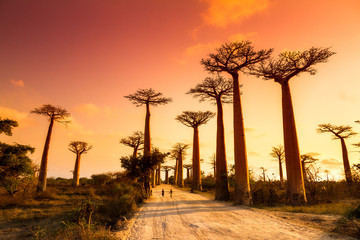
Sursă imagine: https://stock.adobe.com/search?k=madagascar+landscape
Madagascar is the world’s fourth largest island at over 225,000 square miles. Athough all islands have their own unique ecosystems, nature has given Madagascar incredible riches. Roughly ninety per cent of its animal and plant life is found nowhere else on the planet. Its carrot-shaped baobab trees and strange-looking lemurs make even the most well-travelled visitors wide-eyed with amazement and delight.
But its beauty hides the island’s desperate situation. The average Malagasy – as the islanders are known – lives on only a dollar a day, although you would not guess this from their cheerful opimism. Moreover, since the first humans arrived in Madagascar around 2,300 years ago, nearly ninety per cent of the island’s original forest has been lost – either cut down for use as timber or burned to create room for crops and, more recently, cattle.
Alarmed ecologists identified Madagascar as a region in danger and demanded that the cutting and burning stop. In 2002, they celebrated when a new environmentally friendly president, Marc Ravalomanana, was elected. But only seven years later, in 2009, he was replaced by a new leader with little interest in protecting the environment.
Needing money, the new government made it legal to sell wood from hardwood trees which had already been cut down or had fallen during storms. Yet in reality they did little to control the loggers who continued to rob the forests of wood from living trees. The main targets of this environmental crime are the rosewood and the ebony. The wood from these majestic trees is in high demand: in China it is used to make expensive furniture for the new middle class; in Europe and America it is a valued material in the manufacture of musical instruments.
The locals are caught in a trap. Poverty and the high value of rosewood – $ 3,000 per cubic metre – have driven them to cut down trees that they traditionally believed to be scared. It is dangerous and back-breaking work. Using hand axes, in a few hours they bring down a tree that has stood tall for many centuries. Then they cut the trees into two-metre logs and drag them several kilometres to the nearest river. Rosewood trees are not the only victims. In order to transport the heavy rosewood logs down the river, rafts must be built from other wood. To make each raft four or five lighter trees from near the river are cut down. All this disturbs the natural habitat of the istand’s animals and puts their survival at risk.
In this bleak landscape what can bring hope? One man’s work may offer a possible route of the darkness. Olivier Behra, who first came to Madagscar from France in 1987, believes that the only solution is to give local people economic alternatives. In the Vohimana forest he has persuaded the locals to stop cutting down trees and instead to collect medicinal plants and sell them to foreign companies like Chanel. Meanwhile he has trained the village lemur hunter to act as a guide for tourists who wish to photograph them. The same tourists also pay to visit the wild orchid conservatory that Behra has set up. Can small-scale actions like this compete with the greed of Madagasca’s rosewood industry? Or will the lastest government’s promise to stop the illegal trade in rosewood come to anything? Only time will tell.
Madascar in numbers:
The 4th largest island in the world after Greenland, New Guinea and Borneo
90% of its flora and fauna is found nowhere else on Earth
Number 1 producer of vanilla in the world
22 million: population of Madagscar
70 different species of lemur live only on Madagascar
18 different ethnic groups of Asian and African origin
300 years: the time it takes a rosewood tree to reach maturity
24,560 tonnes of ebony and rosewood exported in 2009, much of it illegally