Autor: Isaia Raluca, clasa a XI-a C
Sursă imagine: https://loveideaet.click/product_tag/37996084_.html
Superstitions are beliefs that some things cannot be explained by reason and that there are certain objects or actions that bring good or bad luck. Most superstitions are old and people usually have no idea where they came from. We may be told, for example, that we should never open an umbrella indoors because that will bring bad luck. We aren’t told why or what kind of bad thing might happen to us, but few of us are going to try to find out. Everyone knows that thirteen is an unlucky number. Other things that can bring bad luck include breaking a mirror, walking under a ladder or spilling salt. At least when you spill salt, you can avoid the bad luck by immediately throwing some of the salt over your left shoulder with your right hand. Unfortunately, the man sitting behind you at that moment will suddenly get a shower of salt all over him. Obviously, he must have done something earlier that brought him bad luck. If you ask people why it is bad luck to walk under a ladder, they usually say that it’s because something might fall on your head. It could be a hammer, a brick, a piece of wood, paint or water. It is interesting that the superstition is much darker and more scary. According to the Oxford Guide to British and American Culture, ” this idea may have developed out of the practice in medieval times of hanging criminals from ladders.”
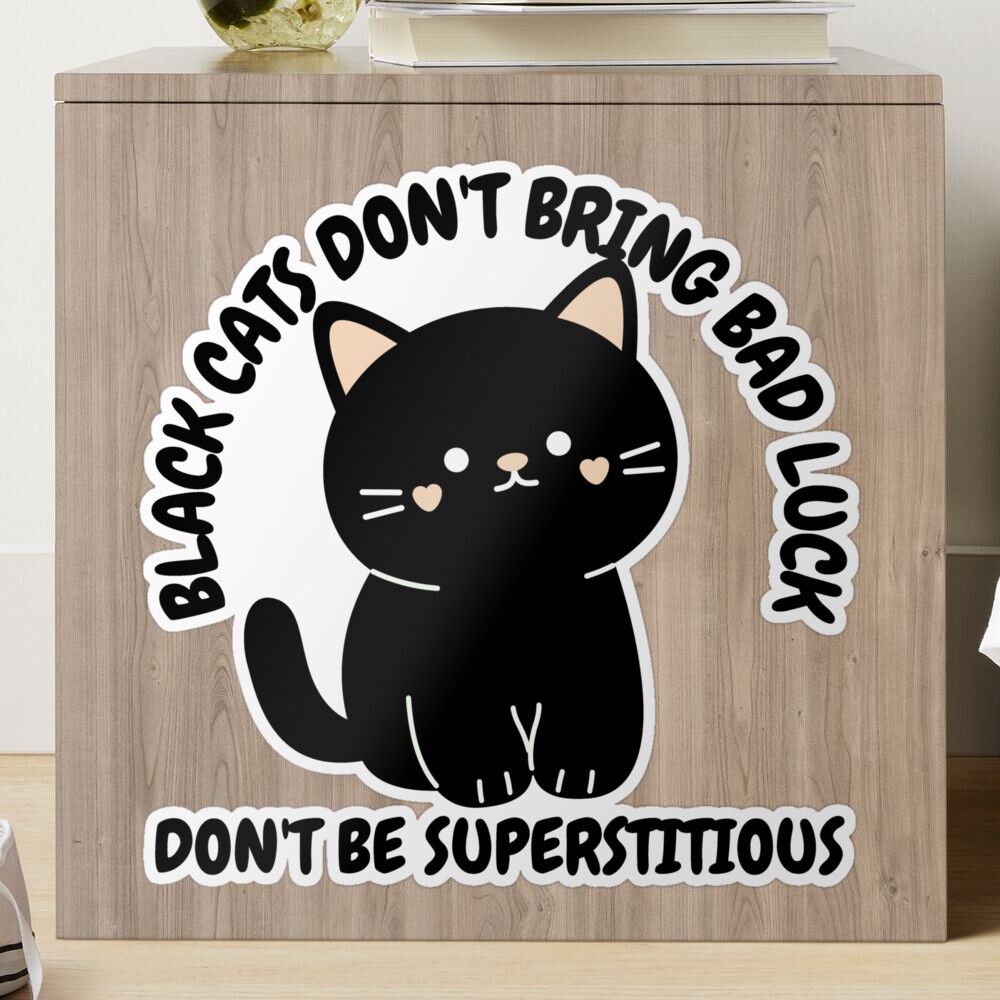
More confusing are those superstitions that seem to have different meanings for different people. Some people will tell you that it is bad luck if a black cat walks in front of you. Others will say that seeing a black cat is supposed to be lucky. Others tokens of good luck are a rabbit’s foot (not lucky for the rabbit, obviously), a special coin, a four-leaf clover and a horseshoe. If you hang the horseshoe over your front door to bring luck to your house, you must be careful to have the open end pointing upwards. If you hang it the other way, your good luck will just drop out through the gap. You can also wish for good luck by crossing your fingers. You don’t have to cross all of them, only the middle finger over the index finger.
There are special phrases that people use to bring luck. There’s ” Good luck”, of course. Another expression is ” Touch wood” or ” Knock on the wood”. This is usually heard when people talk about their good luck or when they hope they will be able to get or do something they want. By using the expression, the speaker tries to avoid having any bad luck that might be caused by talking about having good luck. If there isn’t anything wooden to touch, some people will tap themselves on the head as they ” Touch wood”. However, acting as if you have a wooden head, touching it with your fingers crossed and saying ” Knock on wood” all at once won’t necessarily increase your luck.
All in all, it becomes obvious that humans have always had a propensity for magical and wishful thinking.
Undoubtedly, our inability to explain all the details of our life and universe and our constant desire and expectation for positive outcomes are some of the factors that provide a fertile ground for the development of superstitions.