Autor: Macsim Elena-Adriana, clasa a XI-a C
Sursă imagine: https://www.shutterstock.com/search/budapest?dd_referrer=https%3A%2F%2Fwww.google.com%2F
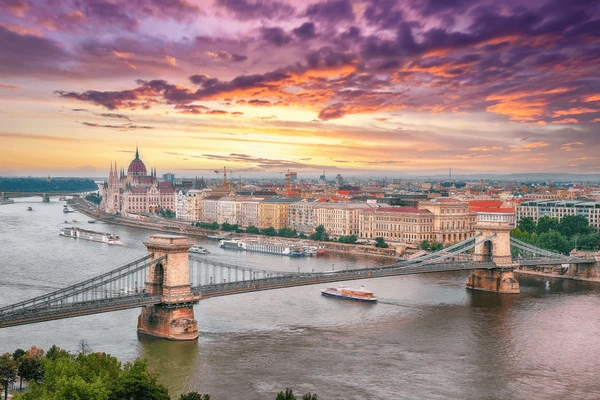
Budapest, the Hungarian capital, is situated on the glorious Danube River in western Hungary. Before amalgamation in 1873, the site was home to two separate towns, Buda and Pest, located on either side of the river. The city’s fascinating variety of architectural styles brings its long and turbulent history alive for the visitor and because of this it is a fabulous location for a trip into the past.
Once you have arrived in the city centre from nearby Ferihegy Airport, take a tour round the entire city so you can find your bearings and get a taste of this fantastic city’s atmosphere. Buda, which can be reached by means of the cheap and efficient underground train or the Szecheny Chain Bridge, is the oldest part of the city. First settled in the Middle Ages, its cobbled streets and Gothic houses are dominated by the recently-restored Buda Castle and the citadel on their imposing hilltop sites. The castle is definitely worth visiting, as it houses the National Library, the Castle Museum and the National Gallery. Across the river, in Pest, you will find stunning examples of Baroque Architecture and a number of fascinating museums. Impossible to miss is the Millennium Monument, a striking colonnade displaying statues of Hungarian kings and leaders, along with a huge statue of the archangel Gabriel surmounting a 188-foot-high central column.
But Budapest is not just a place to look at. There are excellent shopping facilities, a fascinating zoo and plenty of theatres and concert halls offering fine performances. You can end your day by having a delicious meal in one of the many traditional restaurants and, if you are lucky enough to be in Budapest on St. Stephen’s Day, you can witness the stunning firework display which is held on the Citadel.
All in all, Budapest is a delightful city which embodies centuries of the Eastern European past. Its fascination is partly due to the Hungarians’ resourcefulness, a quality necessary to ensure the survival of a city which has had to be rebuilt so many times. Budapest is well worth a visit at any time of the year.