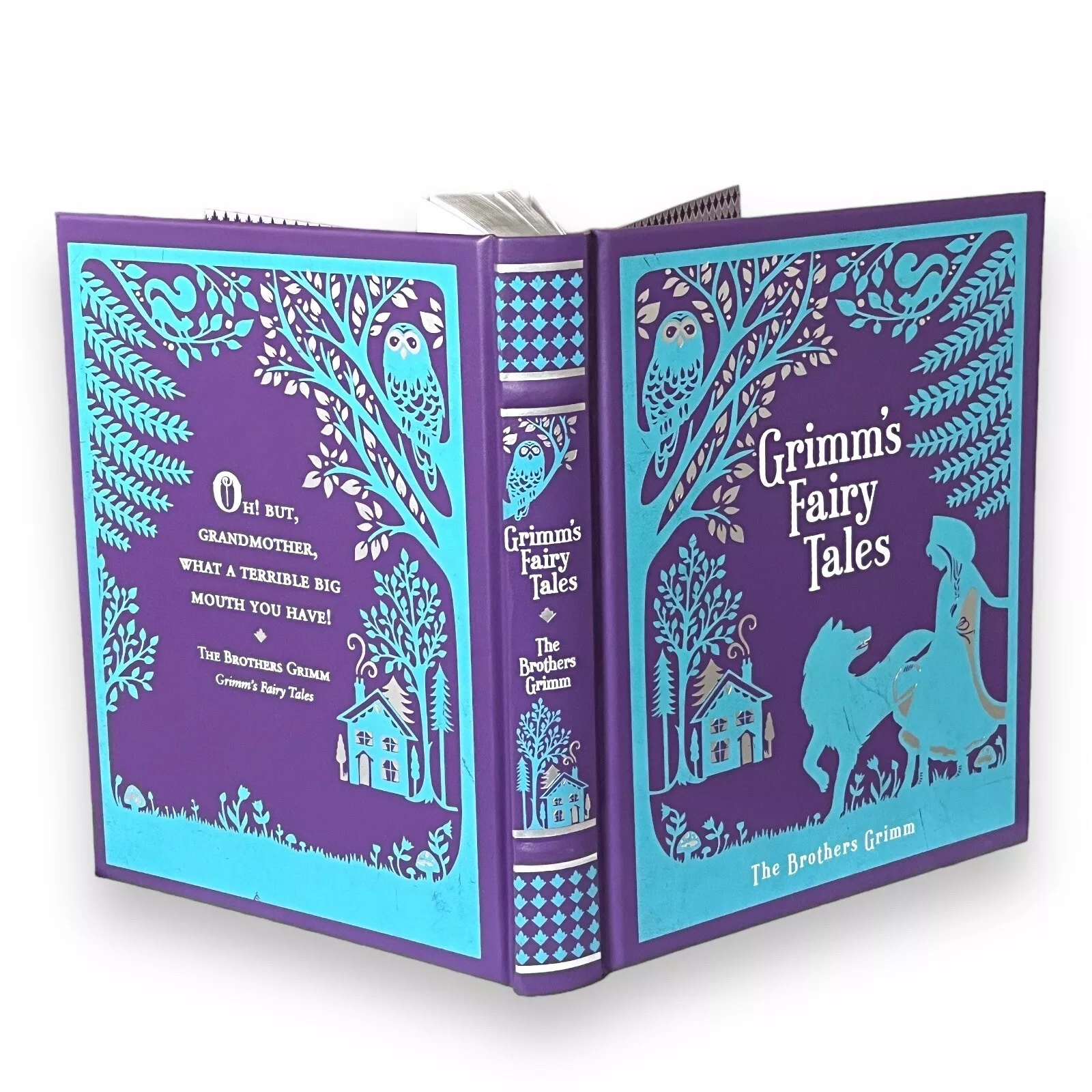
Autor: Isaia Raluca, clasa a XI-a C
Sursă imagine: https://www.ebay.com/itm/266990524316
Once upon a time there lived in Germany two brothers who loved a good story – one with magic and danger, royalty and villains. At school they met a wise man who led them to a treasure – a library of old books with tales more than enchanting than any they had ever heard. Inspired, the brothers began collecting their own stories, listening to the folktales people told them. Soon they produced their own treasure – a book of fairy tales that would fascinate millions in faraway lands for generations to come.
The Brothers Grimm, Jacob and Wilhelm, named their story collection ” Children and Household Tales” and published it in Germany in 1812. The collection has been translated into more than 160 languages, from Inupiat in the Arctic to Swahili in Africa. As a global publishing phenomenon, it competes with the Bible. The Japanese have built two theme parks devoted to the tales and in the United States the Grimms’ collection helped to make Disney a media giant.
The humble Grimms would have been embarrassed by such fame. During their lifetime their collection sold only a few copies in Germany and the early editions were not even aimed at children. They had no illustrations and scholarly footnotes took up almost as much space as the tales themselves. Jacob and Wilhelm Grimm viewed themselves as students of local folklore who were trying to save the stories of oral storytellers from disappearing.
As in many other countries, storytelling had been popular in Germany long before the Grimms’ time. During long winter nights people would keep each other entertained with tales of adventure, romance and magic. To write their stories, the Grimms interviewed about forty such storytellers who visited them at their house in Kassel.
Although the brothers claimed that they were just keeping records of tales, Wilhelm continued to improve and reshape the stories up to the final edition of 1857. In an effort to make them more acceptable to children’s parents, he stressed the moral of each tale. The collection, he said, should be used as ” a manual of manners”: keep your promises, don’t talk to strangers, work hard, obey your parents.
Yet despite all Wilhelm’s editing, often the unpleasant details of the stories were left untouched. The cruel treatment of children ( the children, Hansel and Gretel are put in a cage by a witch and then fattened ready for eating) and the violent punishments handed out to the stories’ villains ( in the original ” Snow White”, the evil stepmother is forced to dance in red-hot iron shoes until she falls down dead) are still too much for some parents.
So why are they still so popular?
Some suggest that it is because they are about our struggle for happiness: ” Cinderella” is a classic ” rags to riches” story, where a poor young girl finds her wealthy prince; ” Beauty and the Beast” is about a girl with such a loving nature that she sees past the monstrous looks and bad temper of the Beast the good in him.
Grimms’ tales were part of a storytelling tradition, not just in Germany but worldwide, which often gave people an escape from the hard realities of daily life, but also hope for a better future. But as for the brothers themselves, they just wished to retell these exciting stories accurately. In doing so, they ensured that Grimms’ fairytales would live happily ever after.